

By Andrew Bayunga and Winny Nekesa Akullo | January 22, 2026
Through its Membership Committee’s event sponsorship program, IASSIST sponsored a one-day consultative workshop on Data Literacy for Law Librarians. The workshop was held on 18th September 2025 at Makerere University. The workshop aimed at equipping law librarians and legal information professionals with the knowledge, skills, and practical competencies required to effectively understand, manage, analyze, and use data in support of legal research, access to justice, and evidence-based decision-making.
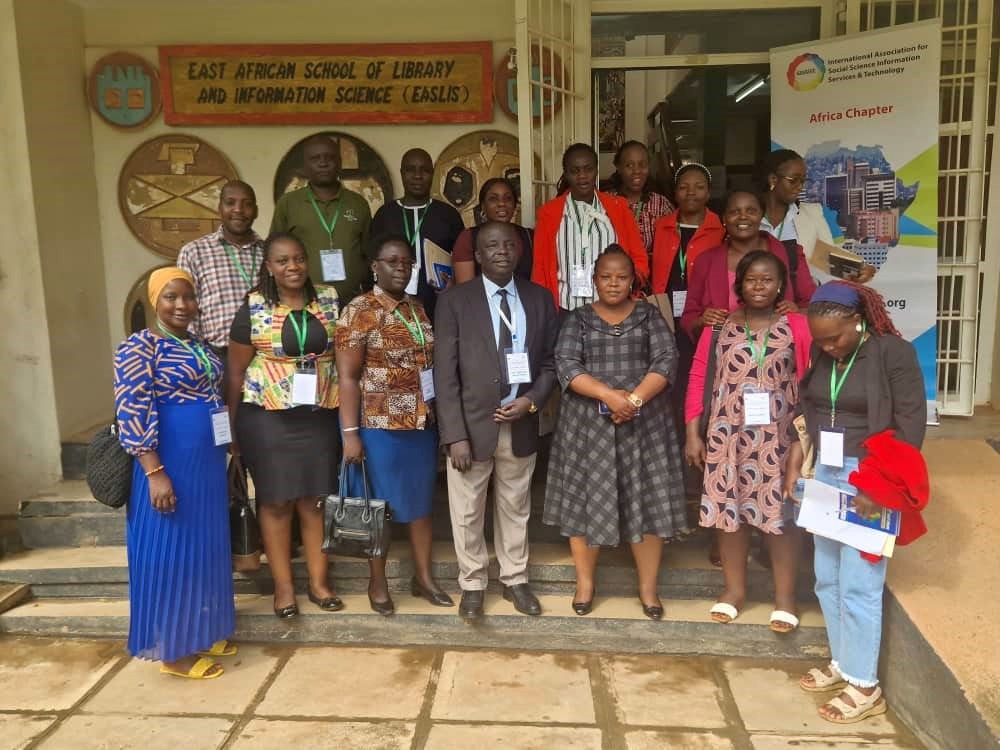
Some of the Workshop participants at Makerere University.
The workshop was hosted by the East African School of Library and Information Science (EASLIS), Makerere University. The hybrid workshop attracted over 17 in-person participants from; Parliament of Uganda, Makerere University Library, Law Development Centre, YMCA, Kampala City Council Authority, Inspectorate of Government, Consortium of Uganda University Libraries (CUUL).
The workshop was facilitated by Prof. Constant Obura-Okello, East African School of Library and Information, Andrew Bayunga who represented Simon Engitu, Parliament of Uganda, and Dr. Winny Nekesa Akullo, the IASSIST Event Liaison Coordinator and IASSIST Africa Regional Secretary.
On behalf of the Dean, EASLIS, Dr. Sylivia Namujjuzi welcomed participants to this one-day workshop and underscored its importance in advancing data literacy among law librarians and legal information professionals in Uganda. She applauded the Parliament of Uganda for this initiative and commended IASSIST for its continued support and collaboration in strengthening data literacy capacity across the continent, notably its role in the development of a contextualized data literacy curriculum tailored to the African context.
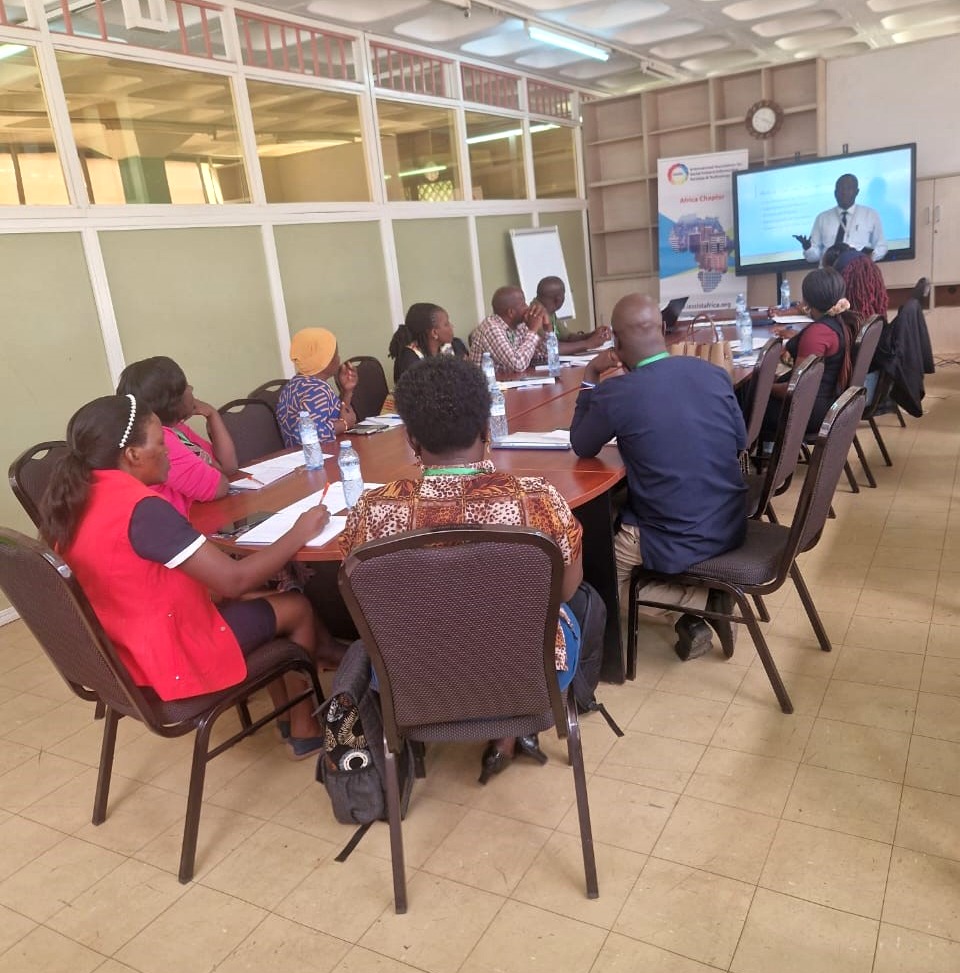
The hybrid workshop attracted over 17 in-person participants.
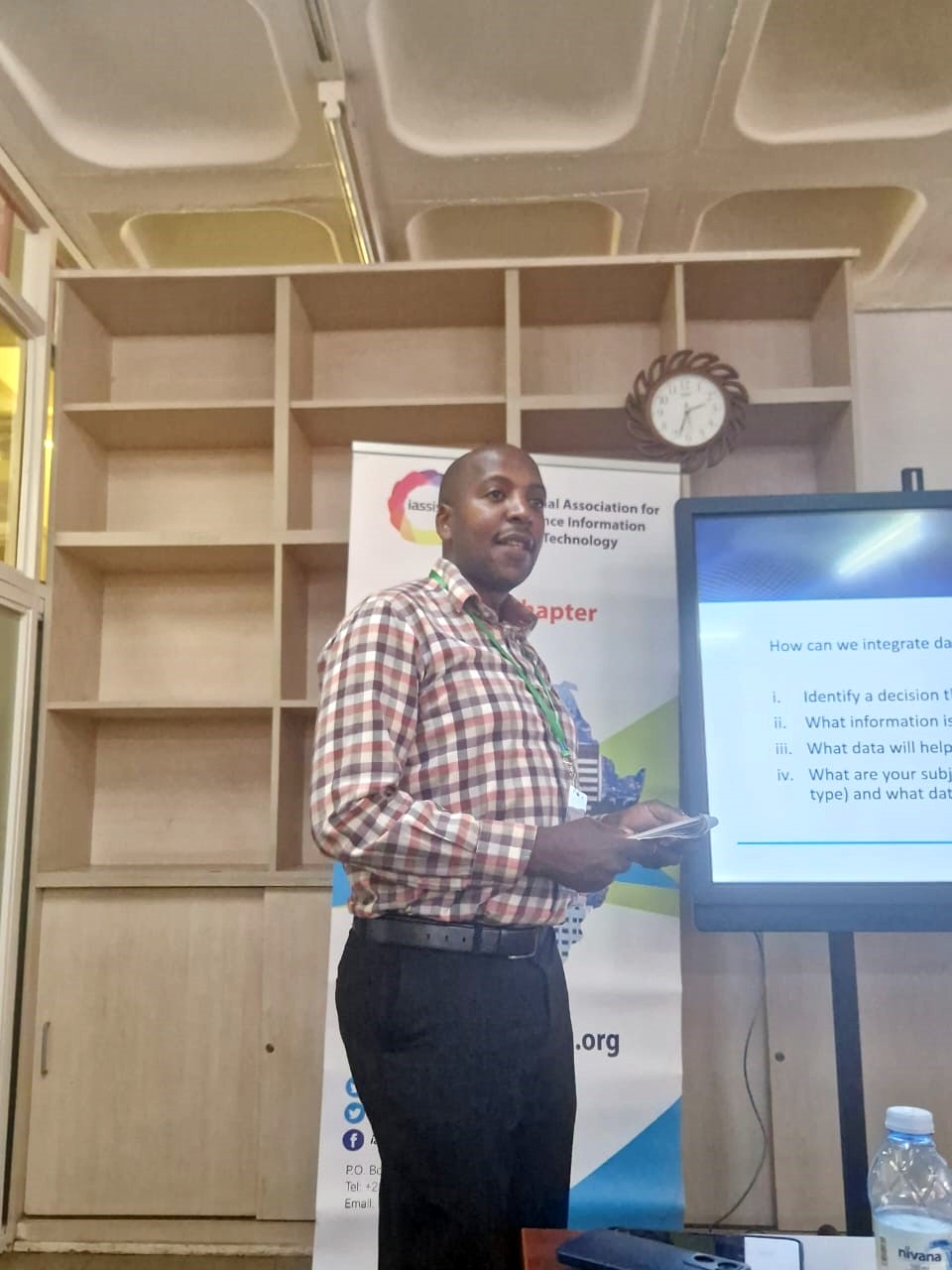
Data Literacy Skills session.
The Data Literacy Skills session equipped participants with essential knowledge and practical competencies to understand, manage, analyze, and ethically use data in legal and information service environments. It covered core concepts such as types of data, data sources, data quality, and the data lifecycle, while emphasizing practical skills in data organization, basic analysis, visualization, and interpretation to support legal research and evidence-based decision-making. The session also addressed ethical, legal, and regulatory considerations, including data privacy, confidentiality, and responsible data use, highlighting the importance of data literacy in strengthening law libraries, supporting access to justice, and enhancing data-driven services within legal and research institutions.
The Data, Law and Libraries session explored the interrelationship between data, legal frameworks, and the evolving role of law libraries in the digital age. It examined how laws and policies govern data creation, access, protection, and sharing, with particular attention to data protection, intellectual property, open data, and regulatory compliance within legal and institutional contexts. The session emphasized the strategic role of law libraries and legal information professionals in supporting lawful, ethical, and transparent data practices, facilitating access to reliable legal data, and strengthening research, accountability, and access to justice initiatives.
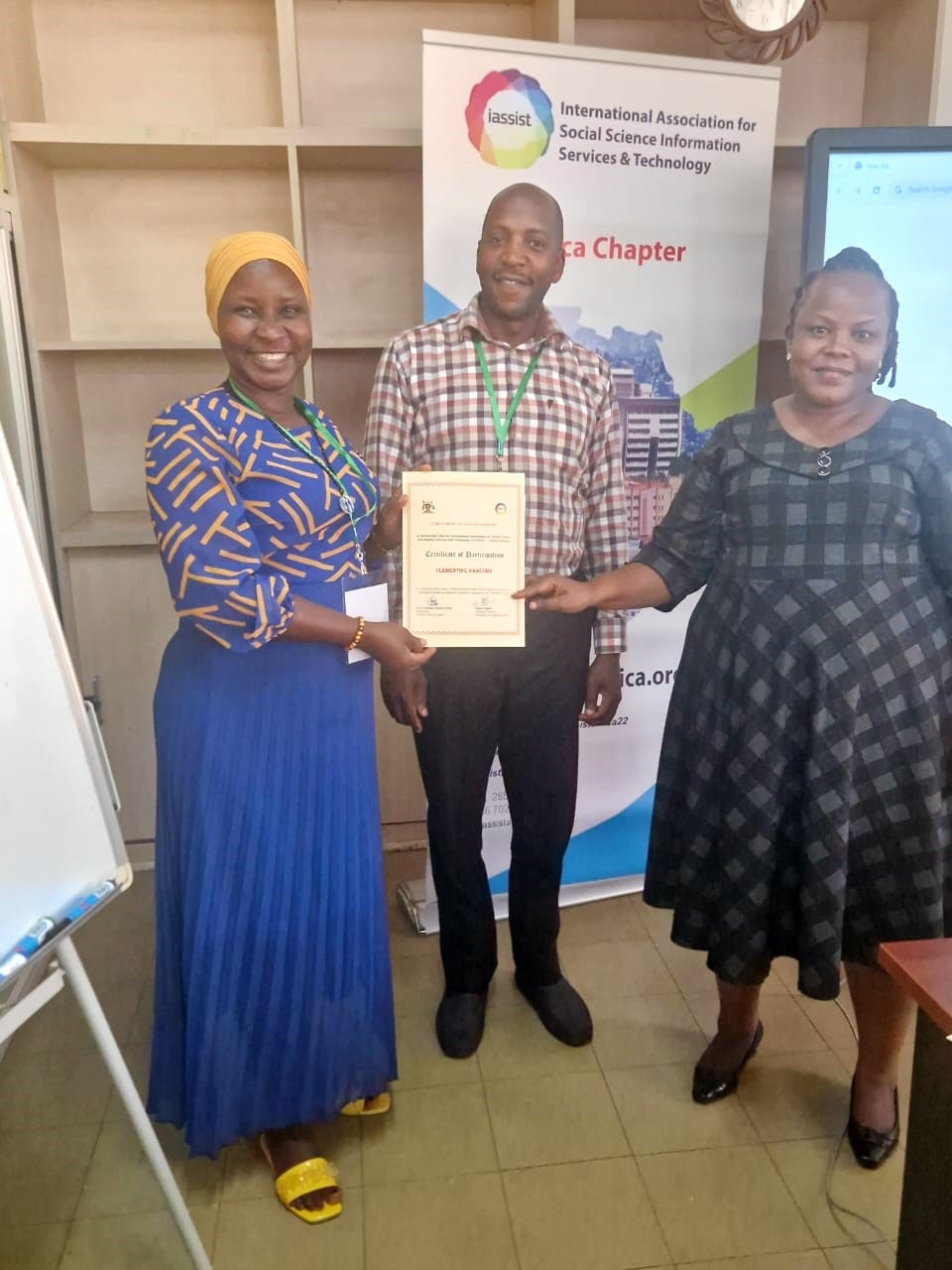
Participants received certificates at the end of the workshop.
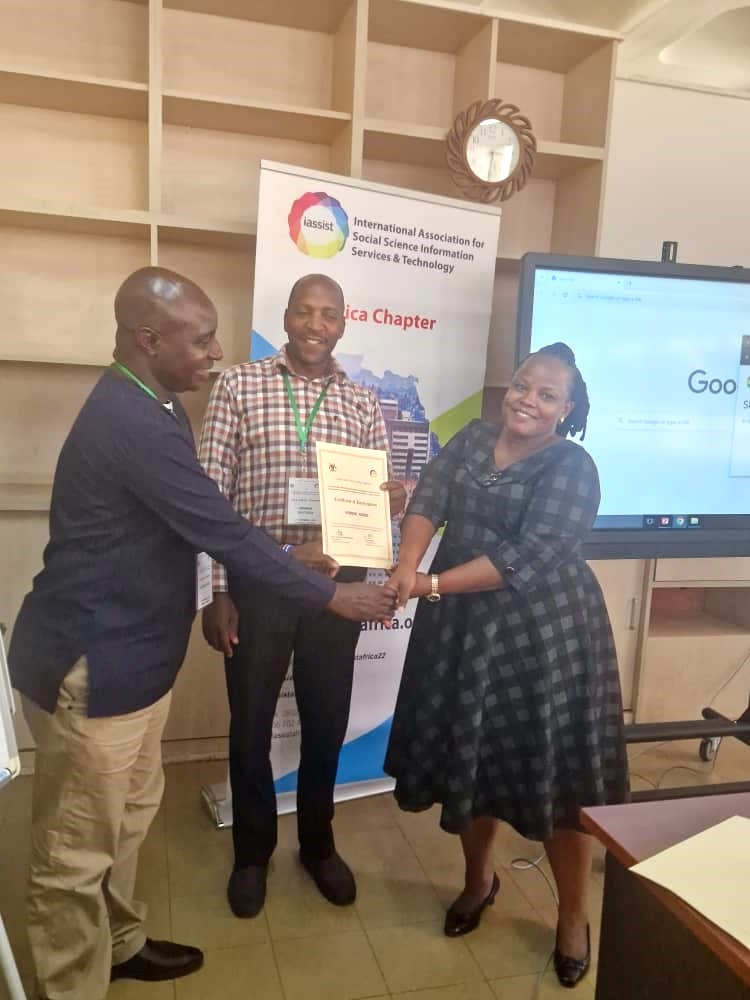
Dr. Namujjuzi, Acting Dean of EASLIS, presenting a certificate.
At the end of the workshop participants:
- Gained essential knowledge and practical skills to understand, manage, analyze, and ethically use data in legal and information service contexts.
- Learned core data concepts, including types of data, sources, quality, and the data lifecycle.
- Developed competencies in data organization, basic analysis, visualization, and interpretation to support legal research and evidence-based decision-making.
- Explored the intersection of data, law, and libraries, including legal frameworks governing data creation, access, protection, and sharing.
- Understood the role of law libraries in promoting lawful, ethical, and transparent data practices and supporting access to justice.
- Increased awareness of data governance, open data initiatives, and regulatory compliance within legal and institutional contexts.
- Strengthened capacity to integrate data-driven approaches and provide reliable, evidence-based services in law libraries and legal institutions.
- Fostered collaboration and knowledge-sharing among participants to advance data literacy across the legal information sector.
The participants appreciated Parliament of Uganda and IASSIST Africa Chapter for the training and initiative to further data literacy.